
So, Game of Thrones ended in pretty disappointing fashion this past week and while it’s sparked a million hot takes and discussions on where the show started to lose steam and accordingly, it’s identity, it’s given me an excuse to talk about finales in a broader sense. While the job of a final season or episode is largely self-explanatory, it feels more and more like it becomes harder for series to stick the landing when it comes time to roll the final credits, begging the question: what makes a good finale?
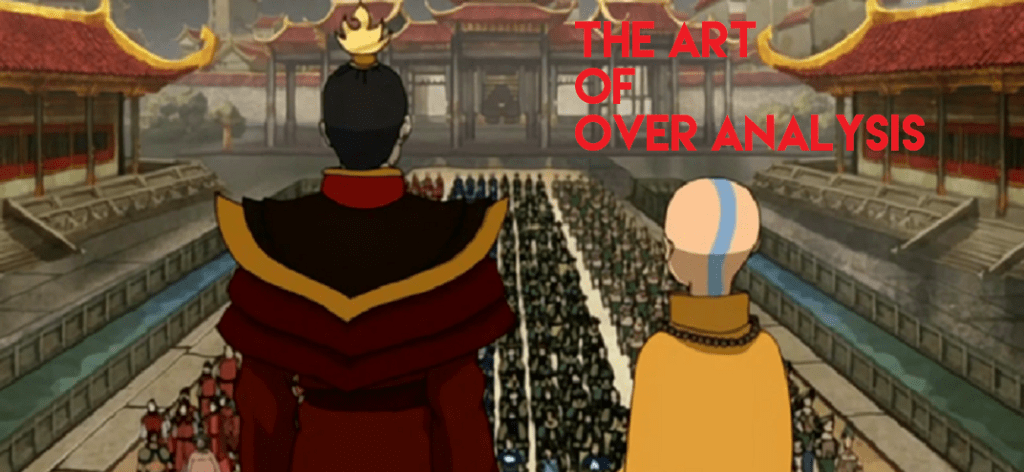
When it comes to great last seasons, one would have to look no farther than Avatar: The Last Airbender, a series still by and large considered one of the greatest shows ever, animated or otherwise, over a decade after it’s final episode, the four-part “Sozin’s Comet” aired. The third and final season of Avatar plays out perfectly and wraps up the end of every main character’s story arcs – none more satisfying than that of the Fire Nation’s Crown Prince, Zuko. After spending the first season relentlessly chasing Aang and company to the North Pole, Zuko and his closest advisor and uncle, Iroh, desert the Fire Nation and seek refuge in the Earth Kingdom’s capital, Ba Sing Se, hiding out from his younger sister, Azula, who’s been tasked with tracking him down and bringing him home, dead or alive. Zuko’s arc in this season revolves around him trying to adjust to his new life – no longer focusing on bringing the Avatar to his father to restore his lost honor, and very earnestly trying to be a normal person in spite of his fugitive status. Hell, he even goes on an incredibly awkward date in “Tales of Ba Sing Se”! Azula does eventually track the two of them down, and convinces her brother to rejoin her side and help defeat the Avatar, essentially promising him that it will get him back into the Fire Lord’s good graces, bringing us to the culmination of his story in season three.

At the outset, Zuko’s got it made – he’s finally got the approval he’s been after from his father, and is heralded as a hero by the Fire Nation at large – plus he’s dating Mai, who definitely had some kind of influence on my taste in girls. But he’s plagued by his actions in Ba Sing Se. Betraying Iroh and breaking the tenuous bond he’d formed with Aang and Katara makes the Prince question himself, and his questions only get deeper in the episode “The Avatar and the Fire Lord”, in which an imprisoned Iroh reveals to Zuko that while his paternal great-grandfather was Fire Lord Sozin, his mother’s grandfather was Avatar Roku, Aang, in a past life. In the two-parter “Day of Black Sun”, Zuko’s turn to the light is completed, when he confronts Fire Lord Ozai, defecting once more and pledging to teach Aang firebending to help him realize his destiny of defeating Ozai and bringing peace to the world. While Zuko takes the driver’s seat in the third season in terms of characters, even assisting in the conclusion of the rest of the cast’s personal stories (i.e. helping Sokka get his dad and Suki out of jail, and helping Katara track down her mother’s killer), the story as a whole moves really well throughout it. From Aang having to hide the fact that Azula didn’t actually manage to kill him and posing as a Fire Nation civilian to the heroes going on the offensive during the eclipse only to have their advantage stolen away by the Fire Nation’s brilliant planning, every single detail of this season is planned down to the letter and executed picture perfect.
On the flip side, what about final seasons that aren’t as airtight? Last arcs that stumble a bit but still manage to be satisfying? A great example of this is YuYu Hakusho, which sprints through its last saga but sticks the landing in its final episode, to leave the characters and the story in a great position to end — or even continue later down the line. After learning of his demonic heritage and effectively being fired from his position as Spirit Detective, protagonist Yusuke Urameshi heads to demon world to meet with his ancestral father, Raizen as the latter wilts away from malnutrition. After a year there, Raizen passes away, creating a power vacuum in Demon World and prompting Yusuke to invent the Demon World Tournament to crown the new King (or Queen) of the Makai. During the tournament, the now 16 year old Yusuke finds himself for the first time without a reason to fight on. In previous sagas, he had a reason to want to win, whether that be professional, like in the Genkai tournament, personal, like in the Dark Tournament, or a mix of the two, as seen in Chapter Black. But in The Demon World Tournament, there’s no prize for him to win, and his victory won’t save or avenge any of his friends. His only stake in this is preventing Yomi from winning – and if he winds up victorious, he’ll be forced to break the promise he made to Keiko before he departed, to return on his 18th birthday and marry her. The last episodes feel a bit rushed – and that’s because they are – mangaka Yoshihiro Togashi had become burned out over the last 6 or so months of production before ending the series in July of 1994, much to the dismay of Shonen Jump’s editorial staff – but the finale is near perfect.

After failing to defeat Yomi, but doing enough damage that Enki manages to beat him and claim the title of Demon World’s new ruler, Yusuke stays behind when Kurama returns home to Human World, with the implication of staying to help Enki. Kurama, Kuwabara, Keiko, and Shizuru head to meet with Genkai, Botan and Yukina on Genkai’s island. Staring out over the water, Keiko begins to break up with the absent former Spirit Detective, declaring that she’s done waiting for him to come back and that it’s time that she gets what she wants, before Yusuke’s voice calls out from off screen, telling her that he doesn’t want her to have to wait anymore, and revealing that he’s finally returned. The two share a kiss under the sunset as the series draws to a close. This is one of my favorite finales to any show, even if the journey to it got a little bumpy towards the end. As much as Yu Yu Hakusho is about the kind of action that characterizes the shonen genre, it’s just as much about the bonds between the characters, and none of those bonds are presented as being as important as the bond between Yusuke and Keiko. She’s one of only two people who believes in him at the beginning of the series, the other being Principal Takenaka. She risks her life to rescue his body from a fire, and in turn he risks his chance to come back to life to save her. It’s his love for her that helps him overcome Suzaku and stop the Makai Insect threat. What I’m getting at is that this ending works, despite the odd pace of the preceding episodes because of Yusuke and Keiko, because these characters getting their happy ending after everything they’ve been through together is so genuinely heartwarming and thematically appropriate that you can’t help but smile.
Sometimes, endings fall flat, and final seasons of shows you once loved become chores to watch; but for every Game of Thrones, there’s an Avatar: The Last Airbender, and for every How I Met Your Mother or Dexter, there’s a Yu Yu Hakusho, and for every hot take, there’s The Art Of Over Analysis – thinking way too hard about tangentially related things since 2016.


 stationsixtysix.com
Leave a comment